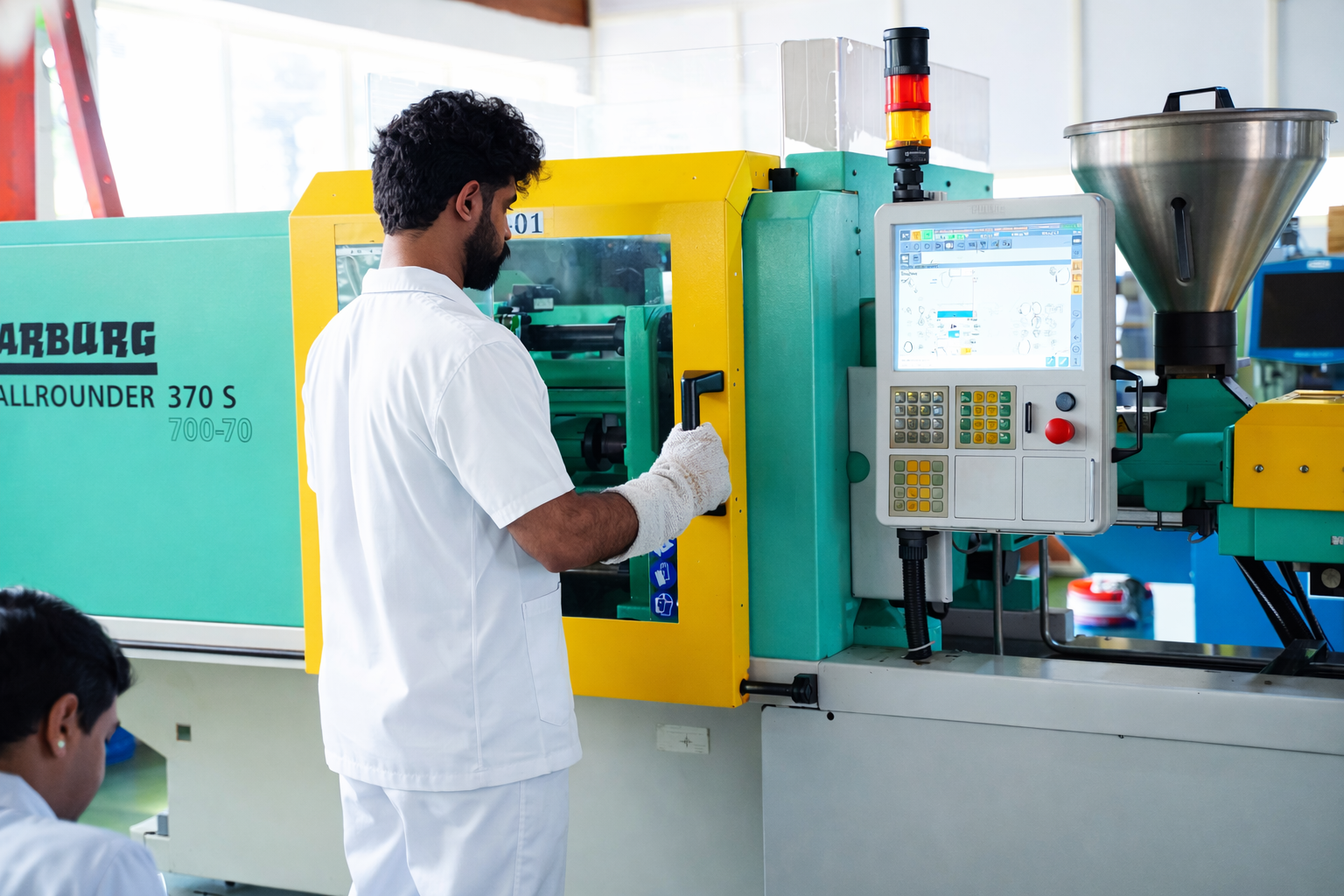
Metal Precision. Unmatched Results.
Advanced metal injection moulding for complex, high-strength parts. Achieve intricate geometries, high density, and efficient production—ideal for demanding applications across multiple industries.
Advanced metal injection moulding for complex, high-strength parts. Achieve intricate geometries, high density, and efficient production—ideal for demanding applications across multiple industries.
At Southern Moulding Components, MIM is more than a process—it is the foundation of how we deliver consistent quality, scalability, and engineering excellence for medium to large production volumes.
Metal Injection Moulding (MIM) is an advanced manufacturing technology that seamlessly blends the flexibility of plastic injection moulding with the strength, density, and reliability of high-performance metals. It enables the production of intricate, precision-engineered metal components that would otherwise be complex, costly, or impossible to manufacture using conventional methods.
Manufacture intricate parts up to 100 grams, ideal for medium to high production volumes and complex geometries. Ideal process for parts with complex designs required in medium to high volume quantities.
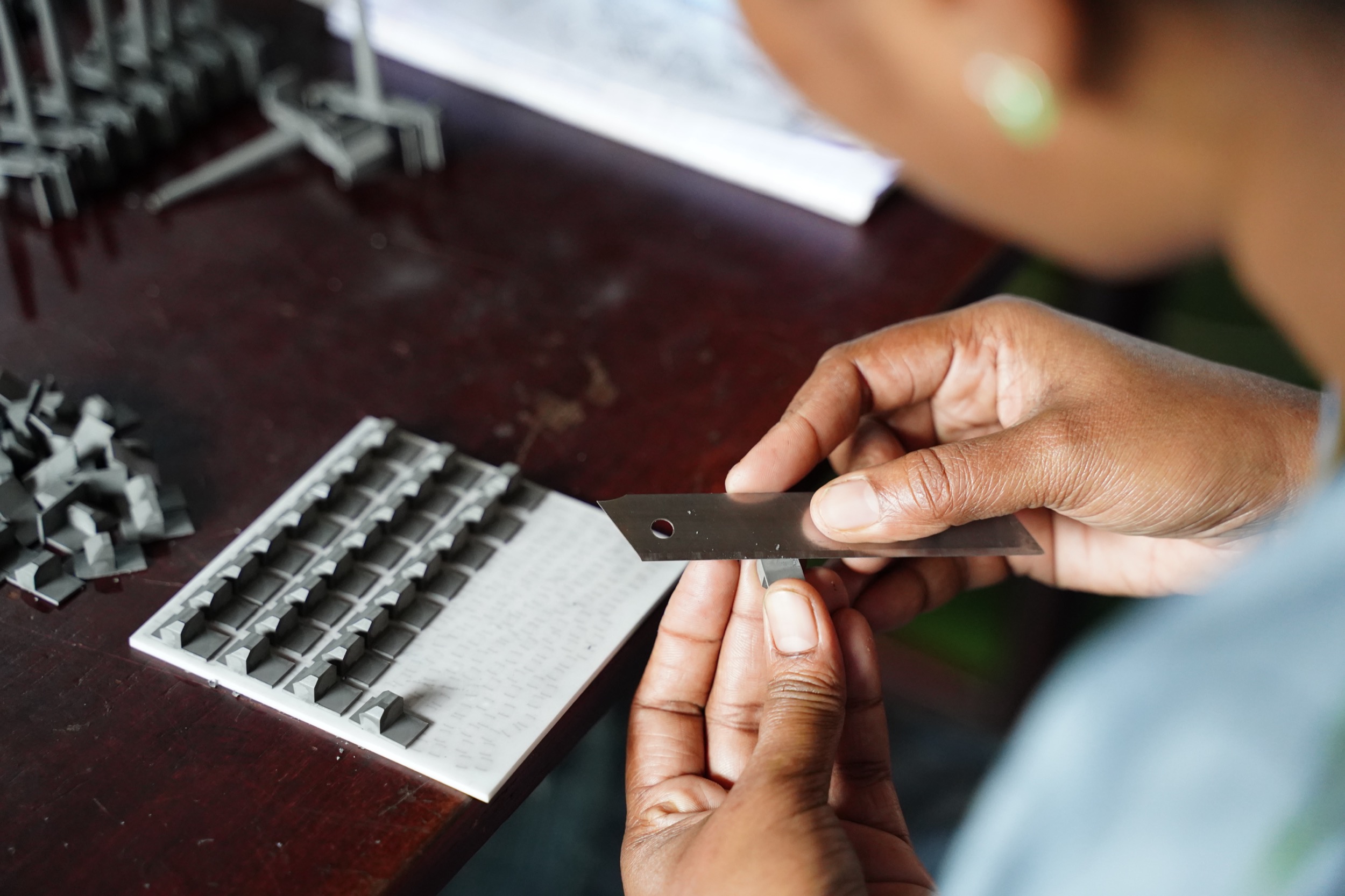
Available materials include stainless steels (17-4 PH, 304, 316), carbon steels, 42CrMo4, and a range of pre-alloys and master alloys. Specialty alloys can be sourced for specific requirements.
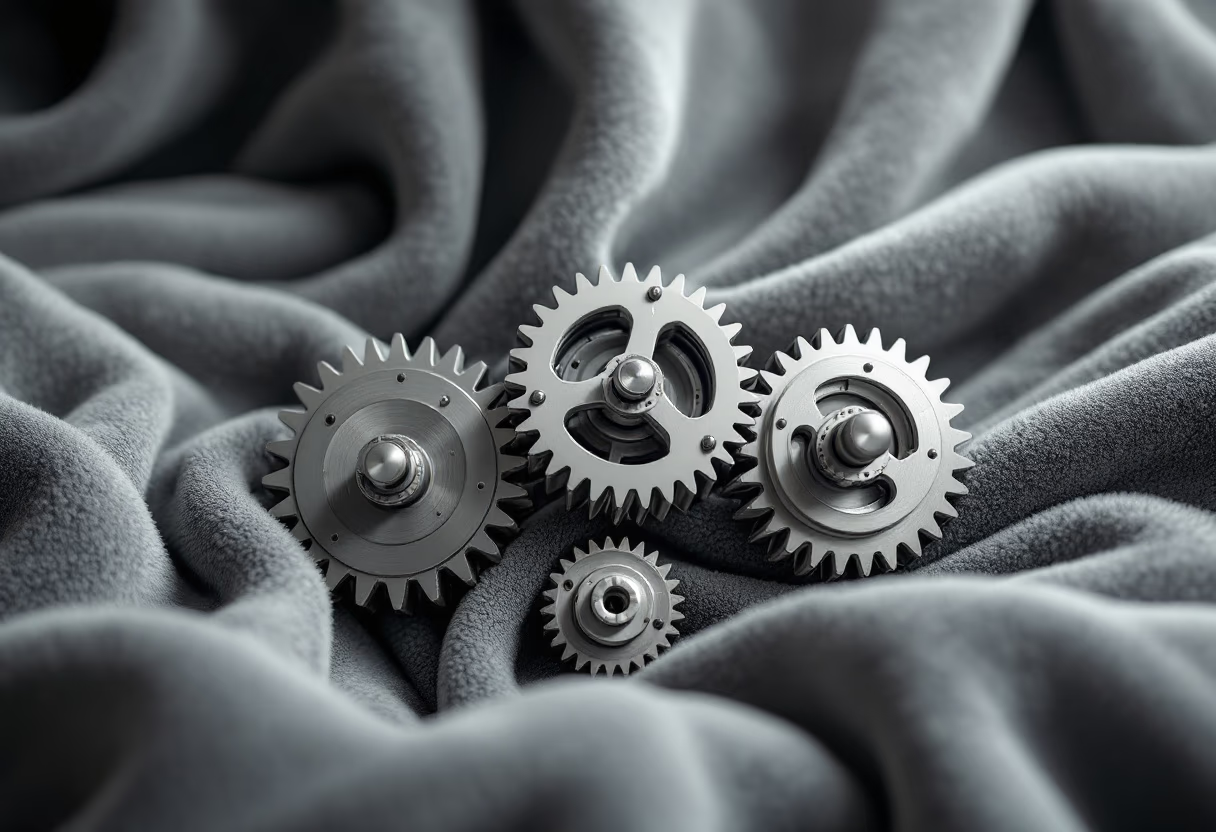
Comprehensive finishing processes deliver precise surface quality and dimensional accuracy for every component.
Supplying precision parts for automotive, medical, electronics, defence, and additional industries.
Quality is integral to every stage of the MIM process at SMC. Robust quality control measures are implemented to ensure consistent performance and customer satisfaction
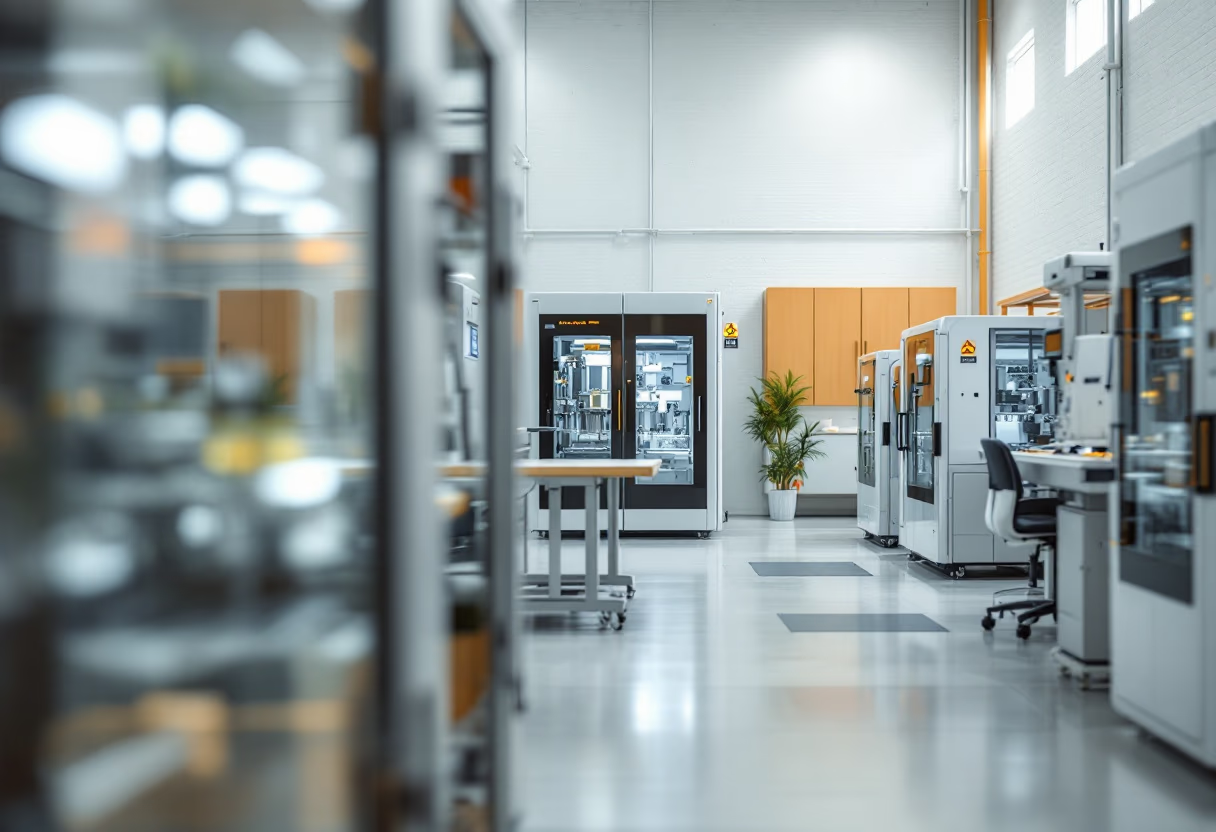
Optimized for automotive, medical, industrial, and consumer assemblies requiring high accuracy.
Metal Injection Moulding (MIM) is an advanced manufacturing technology that seamlessly blends the flexibility of plastic injection moulding with the strength, density, and reliability of high-performance metals. It enables the production of intricate, precision-engineered metal components that would otherwise be complex, costly, or impossible to manufacture using conventional methods.
MIM unlocks new possibilities in component design andperformance, allowing manufacturers to achieve superior complexity, mechanicalstrength, and production efficiency with minimal material waste.
• Enables highly complex and intricate geometries
• Cost-effective solution for medium to high production volumes
• Near-net-shape manufacturing with minimal material loss
• Reduced lead times compared to investment casting
• Mechanical properties comparable to wrought alloys
• High sintered density achieved through fine metal powders
• Minimal secondary machining and finishing operations
• Supports part-count reduction and weight optimization in assemblies
CNC machining delivers accuracy but often results in high material wastage and longer cycle times for complex parts. MIM significantly reduces material usage while enabling geometries that machining struggles to achieve economically.
Casting is suitable for larger components but can fall short on dimensional accuracy, surface finish, and mechanical strength. MIM offers superior density, tighter tolerances, and enhanced mechanical performance.
Conventional powder metallurgy restricts geometric complexity. MIM overcomes these limitations, offering intricate designs with material properties equivalent to wrought metals. Metal Injection Moulding stands apart as the preferred solution when complexity, strength, productivity, and design efficiency must coexist.
Explore detailed answers about metal injection moulding technology, material options, applications, and quality standards.
Metal injection moulding combines fine metal powders with a binder, enabling the production of complex, high-strength metal parts with precise geometries and excellent mechanical properties.
Available materials include stainless steels (17-4 PH, 304, 316), carbon steels, 42CrMo4, and a range of pre-alloys and master alloys. Specialty alloys can be sourced for specific requirements.
MIM is suited for automotive, medical, electronics, industrial, security, and power tool components, especially where intricate shapes and high performance are essential.
Parts up to 250 grams can be produced, depending on geometry and volume. The process is optimized for small to medium-sized, detailed components.
Finishing options include magnetic polishing, tumble polishing, shot peening, and additional secondary operations to achieve required surface and dimensional specifications.
Quality assurance involves statistical process control, raw material inspection, and comprehensive final testing to meet customer and industry standards.
Have more questions? Reach out to our team on Whatsapp.
Have more questions? Reach out to our team on Whatsapp.